


Tiamat - "3" The Empress İlksel Ananın ve Yaratım Kaosunun Arketipi
- Hatice Gül
- 29 Nis
- 6 dakikada okunur

The text has both Turkish and English translations. You can see it at the bottom of the website page.
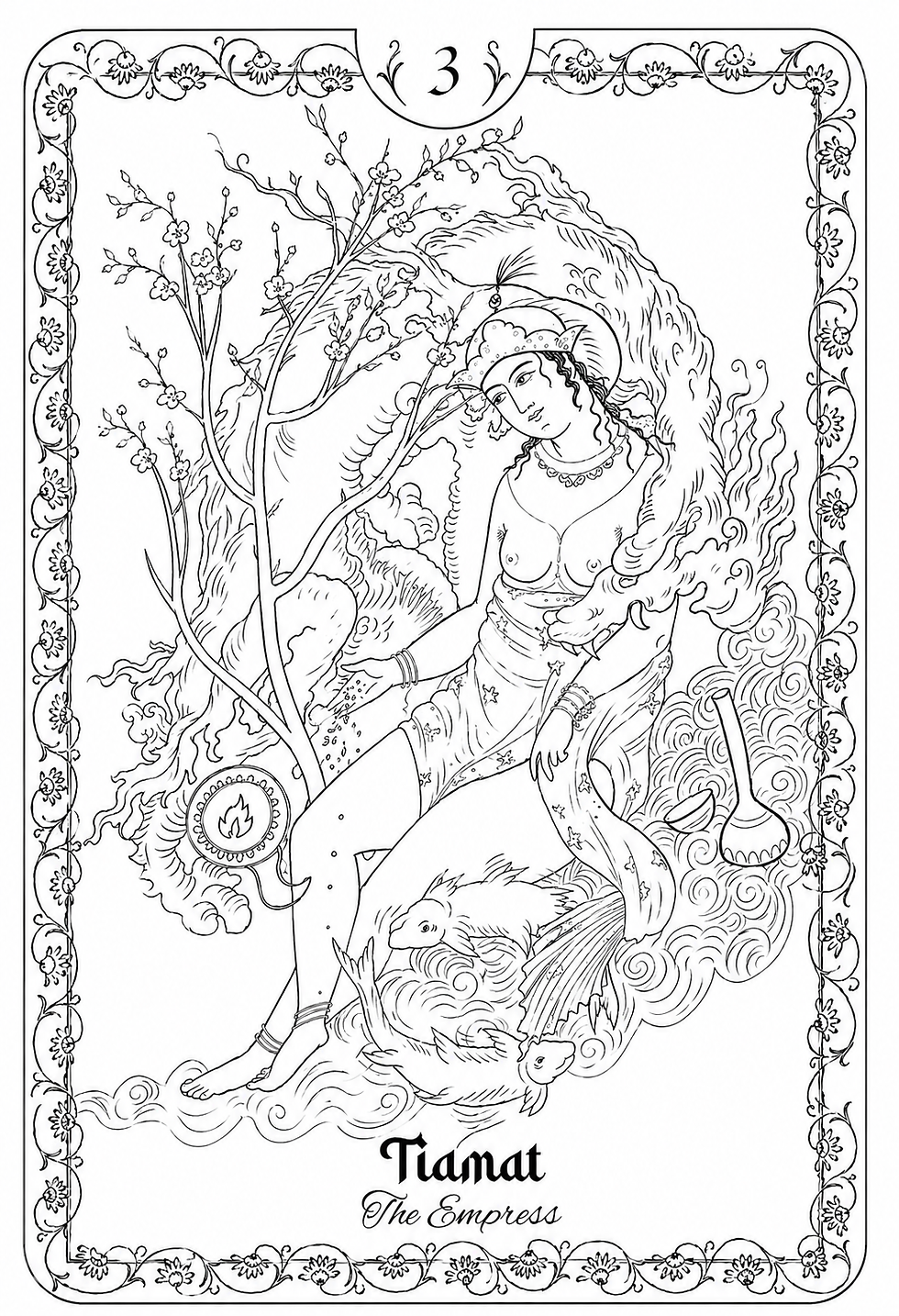
Tarot geleneğinde “The Empress” kartı; bereketi, üretkenliği, doğayı, anneliği ve yaşamın büyümesini temsil eder. Klasik yorumlarda bu figür çoğu zaman huzurlu bir doğa kraliçesi ya da koruyucu bir ana olarak resmedilir. Ancak Tiamat kartı, bu arketipi yalnızca yeniden yorumlamakla kalmaz; onu Mezopotamya, Anadolu, Pers ve eski doğu mitolojilerinin ilksel hafızasına geri taşır.
Bu kartta karşımıza çıkan figür, medenileştirilmiş bir “imparatoriçe” değildir. O:
doğanın kendisi,
yaratımın ilk bedeni,
yaşamın vahşi kaynağı,
kaosun doğurgan yüzü,
ilksel ana arketipi
gibi görünür.
Kartın merkezindeki enerji “huzurlu bereket” değil; yaşayan, dönüşen ve kontrol edilemeyen üretkenlik hissidir.
“Tiamat” ismi doğrudan Mezopotamya’nın kadim yaratım figürlerinden birini çağrıştırır. Tiamat; ilksel okyanusu, yaratım öncesi kaosu, yaşamın başlangıcını ve hem yaratıcı hem yıkıcı olan dişil gücü temsil eder. Bu nedenle kartın atmosferi klasik Empress yorumlarından çok daha eski, daha pagan ve daha kozmik bir yerde durur.
Kartın en güçlü taraflarından biri, figürün doğanın içinde değil; doğanın kendisi gibi görünmesidir. Karakter suyla birleşir, ağaçlarla iç içe geçer, hayvanlarla aynı ritimde var olur. İnsan bedeni burada doğadan ayrı bir şey değil; onun devamı gibidir. Bu yaklaşım özellikle Mezopotamya, Anadolu ve eski doğurganlık kültlerinde sıkça görülen “kadın bedeninin kozmik doğayla birleşmesi” fikrini çağrıştırır.
Kartta dört elementin de izleri hissedilir:
ateş,
su,
toprak,
canlı doğa.
Ancak bu elementler ritüelistik bir düzen içinde değildir. Taşkın, hareketli ve birbirine karışmış hâlde görünürler. Kart bu yüzden düzenlenmiş bir dünyayı değil; henüz biçimlenmekte olan yaşamı hissettirir.
Figürün bedeninin suyla birleşmesi özellikle önemlidir. Çünkü Tiamat anlatıları kozmik suyla, yaratım öncesi okyanusla ve yaşamın ilk hâliyle ilişkilidir. Karttaki su yalnızca dekoratif bir unsur değildir; figürün ruhsal uzantısı gibi davranır. İçindeki kırmızı balıklar ise yaşam enerjisini görünür hâle getirir.
Balık sembolü birçok eski kültürde:
doğurganlık,
yaşam döngüsü,
bilinçaltı,
ruhsal akış,
bereket
ile ilişkilendirilir.
Ancak burada balıkların kırmızı oluşu sembolün tonunu değiştirir. Bu balıklar sakin ya da dingin değildir; canlı, hareketli ve neredeyse kan dolaşımı gibi hissedilir. Sanki figürün içindeki yaşam enerjisi suyun içinde hareket etmektedir.
Kartın en çarpıcı detaylarından biri de figürün bedenindeki küçük kan izleridir. Bu detay, kartı idealize edilmiş güzellik anlayışından uzaklaştırır. Buradaki beden:
yaşayan,
dönüşen,
yaralanabilen,
doğuran
gerçek bir bedendir.
Eski ana tanrıça figürlerinde beden kusursuzluk değil; yaşamın üretildiği kutsal alan olarak görülürdü. Bu nedenle karttaki çıplaklık erotik değil; mitolojik ve ritüelistik bir anlam taşır. Doğurganlık burada romantize edilmez; doğal hâliyle, bedensel ve vahşi biçimde görünür.
Kartın arkasındaki büyük altın yaratık ise kompozisyonun en önemli mitolojik unsurlarından biridir. İlk bakışta aslanı andırsa da figür daha çok:
ejderha,
primordial sürüngen,
tarih öncesi yaratık,
kaos varlığı
gibi hissedilir.
Bu detay kartı doğrudan Mezopotamya’nın yaratım anlatılarına yaklaştırır. Çünkü Tiamat figürü birçok anlatıda:
deniz ejderhası,
sürüngen ana,
kozmik canavar
olarak tasvir edilir.
Eski Mezopotamya görsel dilinde ejderha, yılan ve sürüngenimsi yaratıklar arasındaki sınırlar bugünkü kadar keskin değildir. Bu yüzden karttaki yaratığın “kadim bir canlı” hissi vermesi oldukça anlamlıdır. Buradaki ejderha kötülüğü değil; yaratım öncesi doğanın kontrol edilemeyen gücünü temsil eder.
En önemli noktalardan biri de figürün bu yaratığı kontrol etmiyor oluşudur. İkisi aynı organizmanın parçaları gibi görünür. Bu da kartın temel fikrini güçlendirir: doğa hükmedilecek bir şey değil, insanın içinden geldiği ilksel güçtür.
Karttaki ağaç sembolü de dönüşüm fikrini derinleştirir. Dalların bir kısmı kurumuşken diğer kısmı çiçek açmaktadır. Bu karşıtlık:
ölüm ve yaşam döngüsünü,
doğanın sürekli değişimini,
yaratım ve çürümenin birlikteliğini
temsil eder.
Dalların figürün bedenine yaklaşması ise insan ile doğa arasındaki sınırın çözülmesini hissettirir.
Kartın genel sembolik dili; Mezopotamya yaratım mitleri, eski doğurganlık kültleri, Anadolu ana tanrıça anlatıları, Pers kozmolojisi ve ilksel dişil arketiplerin ortak hafızasında şekillenir. Kart özellikle:
Tiamat,
İnanna,
Kybele,
eski su tanrıçaları,
doğa ana figürleri
gibi mitolojik çağrışımlar taşır.
Ancak bu etkiler birebir mitolojik kopyalar gibi değil; yeniden doğmuş semboller gibi görünür. Bu da kartı yalnızca bir Tarot illüstrasyonu olmaktan çıkarıp kendi mitolojik dilini kuran bir anlatıya dönüştürür.
Sonuç olarak Tiamat, klasik “The Empress” arketipini romantik bereket figüründen çıkararak onu çok daha eski, vahşi ve kozmik bir forma dönüştürür. Bu kartta doğa yalnızca güzel değildir; aynı zamanda kanlı, üretken, yıkıcı ve yaşam doludur. Çünkü burada yaratım, düzenli bir bahçe değil; kaosun içinden doğan ilksel yaşamdır.
------------
Tiamat — The Empress
The Archetype of the Primordial Mother and the Chaos of Creation
In the Tarot tradition, “The Empress” card represents fertility, abundance, nature, motherhood, and the growth of life itself. In classical interpretations, this figure is often portrayed as a peaceful queen of nature or a nurturing maternal presence. Tiamat, however, does not simply reinterpret this archetype; it returns it to the primordial memory of Mesopotamian, Anatolian, Persian, and ancient Eastern mythology.
The figure presented in this card is not a civilized empress. She appears instead as:
nature itself,
the first body of creation,
the wild source of life,
the fertile face of chaos,
the primordial mother archetype.
The central energy of the card is not peaceful abundance, but living, transforming, uncontrollable fertility.
The name “Tiamat” immediately evokes the mythological memory of one of the great primordial figures of Mesopotamian creation myths. Tiamat represents the cosmic ocean, pre-creation chaos, the origin of life, and the feminine force that is both creative and destructive. Because of this, the atmosphere of the card stands far older, more pagan, and more cosmic than the traditional interpretations of The Empress.
One of the card’s strongest qualities is the way the figure does not merely exist within nature, but appears to be nature itself. She merges with water, intertwines with trees, and exists in harmony with animal life. The human body here is not separated from nature; it is an extension of it. This approach strongly recalls the ancient idea — common in Mesopotamian, Anatolian, and fertility cult traditions — of the feminine body as part of the cosmic natural order.
All four elements can be sensed throughout the composition:
fire,
water,
earth,
living nature.
Yet these elements are not arranged within a ritualistic order. They appear overflowing, fluid, and intertwined. For this reason, the card does not evoke a structured world, but life in its raw, formative state.
The figure’s union with water is especially significant. Tiamat herself is associated with the cosmic sea, the primordial ocean, and the first form of life. The water within the card is therefore not decorative; it behaves almost like an extension of the figure’s spirit. The red fish swimming within it make the life force visible.
Across many ancient traditions, fish symbolize:
fertility,
the cycle of life,
the subconscious,
spiritual flow,
abundance.
Yet the fact that these fish are red changes the emotional tone of the symbol entirely. They do not feel calm or passive, but alive and restless — almost like blood flowing through veins. It feels as though the life force within the figure is moving through the water itself.
One of the card’s most striking details is the small traces of blood visible upon the figure’s body. This detail removes the card from the realm of idealized beauty. The body presented here is:
living,
transforming,
vulnerable,
capable of giving birth.
In ancient mother-goddess traditions, the body was not viewed as something to perfect or conceal, but as the sacred vessel through which life emerged. For this reason, the nudity in the card feels neither erotic nor performative; it feels mythological and ritualistic. Fertility here is not romanticized, but shown in its natural, physical, and untamed form.
The large golden creature behind the figure is one of the composition’s most important mythological elements. At first glance it may resemble a lion, yet it feels far more like:
a dragon,
a primordial reptilian being,
a prehistoric creature,
an embodiment of chaos.
This detail directly connects the card to Mesopotamian creation mythology. In many depictions, Tiamat herself appears as:
a sea dragon,
a serpent mother,
a cosmic monster.
In ancient Mesopotamian visual language, the boundaries between dragons, serpents, and reptilian creatures were far less rigid than they are today. Because of this, the creature’s “ancient living being” quality feels deeply appropriate. The dragon here does not symbolize evil, but rather the uncontrollable force of nature before creation itself.
Most importantly, the figure does not appear to dominate this creature. Instead, they feel like parts of the same organism. This strengthens the central idea of the card: nature is not something humanity controls, but the primordial force from which humanity emerged.
The tree within the composition further deepens the theme of transformation. Some branches appear dry while others bloom with flowers. This contrast symbolizes:
the cycle of life and death,
the constant transformation of nature,
the coexistence of creation and decay.
The branches reaching toward the figure’s body also dissolve the boundary between humanity and nature.
The symbolic language of the card draws from the shared memory of Mesopotamian creation myths, ancient fertility cults, Anatolian mother-goddess traditions, Persian cosmology, and primordial feminine archetypes. The imagery especially evokes:
Tiamat,
Inanna,
Cybele,
ancient water goddesses,
mother nature archetypes.
Yet these influences do not feel like direct mythological reproductions. Instead, they appear reborn through a new symbolic language. This transforms the card from a simple Tarot illustration into something that feels like part of its own ancient mythology.
Ultimately, Tiamat transforms the classical Empress archetype from a romanticized symbol of fertility into something far older, wilder, and more cosmic. In this card, nature is not merely beautiful — it is bloody, fertile, destructive, nurturing, and alive all at once. Because creation here is not an orderly garden, but primordial life emerging from chaos itself.


Yorumlar