


Câdûger — “1” Bilinç- Kartının Sembolik Analizi
- Hatice Gül
- 29 Nis
- 7 dakikada okunur


The text has both Turkish and English translations. You can see it at the bottom of the website page.
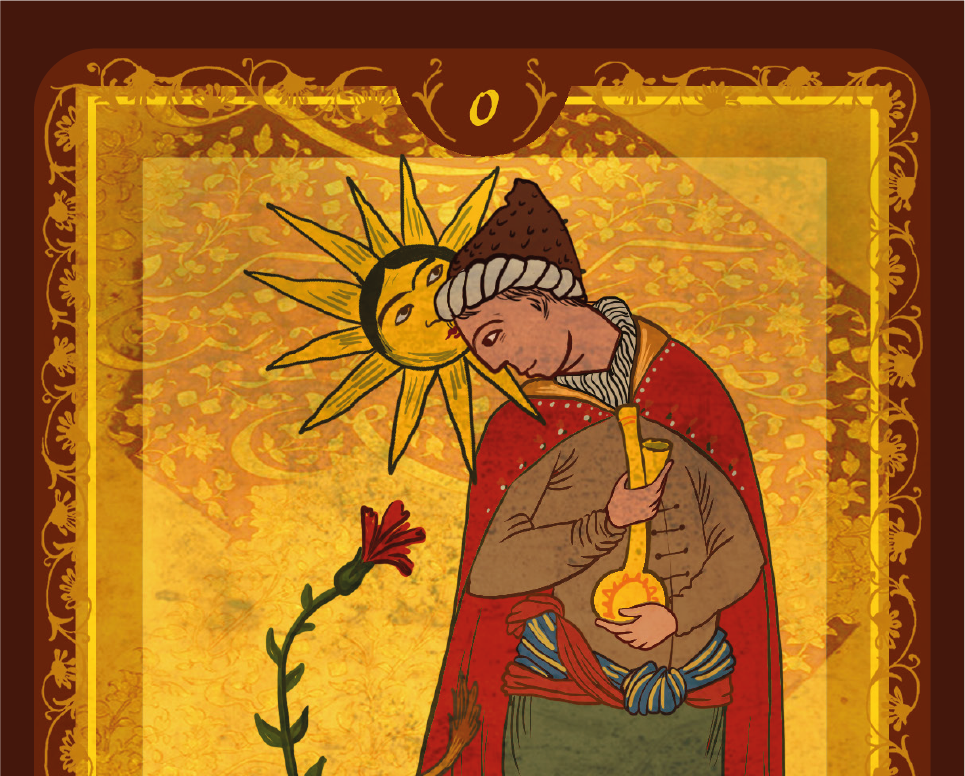
Tarot geleneğinde “1” kartı, çoğunlukla “The Magician” arketipiyle temsil edilir. Bu figür; irade gücü, yaratım, dönüşüm ve görünmeyen potansiyeli gerçeğe dönüştürme yetisiyle ilişkilendirilir. Geleneksel yorumlarda Büyücü, elementleri kontrol eden ve enerjiyi dış dünyaya yönlendiren bir karakterdir. Ancak Câdûger kartı, bu arketipi Pers, Orta Asya, Anadolu ve İslamiyet sonrası mistik sembolizmle yeniden yorumlar. Ortaya çıkan figür, bir sahne büyücüsünden çok gizli bilginin taşıyıcısıdır.
Kartın atmosferi, klasik Batı büyücüsü hissinden oldukça uzaktır. Câdûger daha çok:
bir simyacı,
bir otacı,
bir ritüel uygulayıcısı,
gizli ilimlerle uğraşan yalnız bir bilge,
ya da kadim bilgilerin koruyucusu
gibi görünür.
Kartın ilk dikkat çeken yönlerinden biri figürün duruşudur. Geleneksel Magician kartlarında karakter çoğunlukla ayakta, aktif ve hâkim bir pozisyonda resmedilir. Câdûger ise yere çömelmiş durumdadır. Bu küçük değişim, kartın psikolojik tonunu tamamen dönüştürür. Figür gücü dış dünyaya yönlendiren biri gibi değil; onu kendi içinde inşa eden biri gibi görünür. Toprağa yakın oluşu; sabır, içsel çalışma, ritüel, sessizlik ve gizli dönüşüm hissi yaratır. Bu kart gösterinin değil, içsel simyanın kartıdır.
Karakterin başını hafifçe eğmiş olması da bu hissi güçlendirir. Ancak Baht-ul Divane’deki teslimiyetin aksine, burada yoğun bir odaklanma vardır. Yüz ifadesi neredeyse trans hâlini andırır. Sanki karakter bir büyü gerçekleştirmiyor; unutulmuş bir bilgiyi uyandırıyordur. Kartın enerjisi dışa dönük bir güç gösterisinden çok, görünmeyenle kurulan dikkatli bir ilişki hissi taşır.
Kartın en güçlü sembollerinden biri, figürün arkasında yükselen büyük kırmızı yılan formudur. Bu şekil aynı anda birçok arketipi çağrıştırır:
sonsuzluk işareti,
ouroboros,
döngüsel bilinç,
dönüşüm,
sonsuz geri dönüş,
kozmik devamlılık.
Klasik Tarot’taki Magician kartında başın üzerinde yer alan sonsuzluk sembolü, burada yaşayan organik bir forma dönüşmüştür. Soyut bir işaret olmaktan çıkmış; yaşayan bir varlığa dönüşmüştür. Mitolojik geleneklerde yılan çoğu zaman:
bilgelik,
yasak bilgi,
dönüşüm,
ölüm ve yeniden doğuş,
gizli güç
ile ilişkilendirilir.
Yılanın koyu kırmızı tonlarda olması ise sembolün anlamını daha da yoğunlaştırır. Bu artık yalnızca bilgi değildir; yaşayan, dönüştüren ve yakıcı bir güçtür. Figürün başının arkasında konumlanması, dönüşümün doğrudan bilinç düzeyinde gerçekleştiğini hissettirir.
Kartın renk dili de bu atmosferi destekler. Altın, koyu kırmızı ve toprak tonları kompozisyonun büyük bölümünü oluşturur. Altın geleneksel olarak:
kutsal bilgiyi,
ruhsal aydınlanmayı,
simyayı,
ilahi dönüşümü
temsil eder.
Ancak Baht-ul Divane kartındaki aydınlık altın hissinin aksine, burada altın daha ağır ve kapalıdır. Kart; açık bir aydınlanmadan çok saklı odaları, eski el yazmalarını ve herkese açılmayan bilgiyi çağrıştırır. Atmosferin içinde sürekli bir gizlilik hissi bulunur.
Kırmızı ise bu kartta aşk ya da romantizm değil; yoğunlaşmış güç gibi çalışır. Figürün koyu kırmızı pelerini:
ritüel enerjisi,
yaşam gücü,
kan,
içsel ateş,
ruhsal dayanıklılık
duygusu taşır.
Tasavvufi ve ezoterik sembolizmde kırmızı çoğu zaman “yanmak” ile ilişkilidir; dönüşümün bedelini temsil eder. Bu nedenle karakter sanki kendi dönüşüm ateşinin içinde oturuyormuş gibi görünür.
Kartın en zarif ama en güçlü detaylarından biri figürün elindeki beyaz mumdur. Mum sembolü:
bilinç,
ruh,
geçici yaşam,
saf niyet,
içsel ışık
anlamına gelir.
Ancak mumun alevi klasik sarı yerine kırmızıdır. Bu küçük detay sembolün tüm duygusal tonunu değiştirir. Alev artık yalnızca ışık değil; dönüşüm enerjisidir. Canlı, huzursuz ve ruhsal olarak yoğun bir güç gibi görünür. Karakterin muma dikkatle bakışı da önemlidir. Sanki bilgiyi kullanmadan önce onu anlamaya çalışıyordur.
Diğer elindeki kase ise kartın simyasal tarafını güçlendirir. Geleneksel Magician kartlarında birçok araç görünürken, Câdûger’de nesneler bilinçli olarak azaltılmıştır. Bu sadelik kartın etkisini artırır. Kase:
dönüşüm kabı,
ruhsal taşıyıcı,
simya haznesi,
alıcı bilinç
olarak okunabilir.
Mum ve kase birlikte düşünüldüğünde çok eski bir sembolik denge oluşur:
ateş ve kap,
aktif güç ve alıcı alan,
ruh ve madde.
Yerde duran bıçak ise sessiz ama çok önemli bir detaydır. Bu bıçak saldırıyı değil; ayırmayı temsil eder:
yanılsamayı kesmek,
hakikati ayırmak,
irade,
ritüel sınırı,
karar verme gücü.
Bıçağın yerde ve kullanılmamış halde durması önemlidir. Güç vardır; ancak henüz kontrolsüz biçimde açığa çıkarılmamıştır.
Karttaki doğa unsurları da kompozisyonun sembolik dengesini derinleştirir. Arkadaki bitkiler yukarı doğru yükselirken figür yere doğru çömelmiştir. Bu yön karşıtlığı kartın temel fikirlerinden birini oluşturur: gerçek bilgiye ulaşmak için yükselmek değil, derine inmek gerekir.
Kartın görsel dili; Pers minyatürleri, Orta Asya şamanik sembolizmi, Anadolu halk mistisizmi ve İslamiyet sonrası ezoterik imgelerin birleştiği bir hafıza alanı gibi çalışır. Ancak bu etkiler parçalı ya da dekoratif görünmez. Kartın içinde doğal biçimde birleşerek tek bir sembolik dile dönüşür.
“Câdûger” ismi de bu atmosferi güçlü biçimde tamamlar. “Magician” kelimesine kıyasla daha eski, şiirsel ve gizemli bir tona sahiptir. Farsça kökenli bu kelime:
yasak bilgi,
ritüel,
mistisizm,
gizlilik,
bilgelik ve korku arasındaki ince çizgi
gibi çağrışımlar taşır.
Bu nedenle figür yalnızca güçlü görünmez; aynı zamanda bilgisi yüzünden yalnızlaşmış biri gibi hissedilir.
Sonuç olarak Câdûger, klasik Magician arketipini daha eski, daha sessiz ve daha tehlikeli bir forma dönüştürür. Bu kart dünyaya hükmetmeye çalışan bir figürü değil; dönüşümün eşiğinde duran birini anlatır. Çünkü burada bilgi yalnızca güç değildir; aynı zamanda bedel taşıyan bir şeydir.
----------
Câdûger — A Symbolic Analysis of the “1” Card
Within the Tarot tradition, the card numbered “1” is represented by “The Magician,” an archetype associated with willpower, manifestation, transformation, and the ability to channel unseen potential into reality. Traditionally, the Magician stands as a figure of mastery — someone who controls the elements before him and directs energy outward into the world. In Câdûger, however, this archetype is reinterpreted through a symbolic language shaped by Persian, Central Asian, Anatolian, and post-Islamic mystical influences. The result is not a performer of spectacle, but a keeper of hidden knowledge.
The atmosphere of the card immediately distances itself from the image of the Western ceremonial magician. Instead, Câdûger evokes the presence of:
an alchemist,
a mystic,
a ritual practitioner,
an herbal healer,
or a solitary scholar of forbidden wisdom.
One of the first striking differences lies in the figure’s posture. Unlike the traditional Magician, who is commonly depicted standing upright in a commanding pose, Câdûger is crouched low to the ground. This shift completely alters the psychological tone of the archetype. The figure does not appear to dominate power outwardly; rather, he seems to cultivate it inwardly. His closeness to the earth suggests patience, introspection, secrecy, and ritual concentration. This is not the energy of performance, but of quiet transformation.
The figure’s bowed head further reinforces this inward focus. Yet unlike Baht-ul Divane, whose lowered gaze symbolizes surrender, the posture here conveys concentration and disciplined attention. His expression feels meditative, almost trance-like, as though he is studying an ancient force rather than attempting to control it. The card suggests not the act of creating magic, but the awakening of forgotten knowledge.
Perhaps the most powerful symbol in the composition is the large serpent form rising behind the figure’s head. This shape immediately recalls multiple archetypal associations at once:
the infinity symbol,
the ouroboros,
cyclical consciousness,
transformation,
eternal return,
and cosmic continuity.
In classical Tarot, the infinity sign above the Magician’s head symbolizes limitless potential and mastery over the spiritual and material realms. In Câdûger, however, this symbol has become organic and alive. Rather than appearing abstract, it takes the form of a living serpent — a being associated across countless mythological traditions with wisdom, hidden knowledge, transformation, danger, and rebirth.
The fact that the serpent appears in deep crimson tones is especially significant. Red transforms the symbol into something active and volatile. This is not passive wisdom, but living knowledge — something capable of burning, changing, or consuming the one who seeks it. Positioned behind the figure’s head, the serpent suggests that transformation is occurring within consciousness itself.
The card’s color palette deepens this atmosphere further. Gold, dark crimson, and muted earth tones dominate the composition. Gold traditionally symbolizes:
sacred knowledge,
illumination,
divinity,
alchemical transformation.
Yet unlike the luminous warmth found in Baht-ul Divane, the gold in Câdûger feels heavier and more concealed. It evokes the sensation of hidden chambers, ancient manuscripts, and knowledge that is not freely accessible. The card does not radiate openness; it radiates secrecy.
Crimson, meanwhile, operates here not as romance or emotional intensity, but as concentrated force. The dark red cloak surrounding the figure evokes:
ritual power,
life force,
blood,
inner fire,
and spiritual endurance.
Within Sufi and esoteric symbolism, red is often linked to the idea of burning — the painful but necessary process through which transformation occurs. The figure appears wrapped within that process itself.
One of the card’s most delicate yet powerful details is the white candle held in the figure’s hand. Symbolically, the candle represents:
consciousness,
spirit,
temporary existence,
purity of intention,
inner illumination.
Yet the flame burning atop it is not golden, but red. This subtle choice changes the entire emotional tone of the symbol. The flame no longer represents passive light alone, but transformative energy — something alive, unstable, and spiritually charged. The figure studies the flame carefully, almost reverently, suggesting that wisdom must first be understood before it can be used.
In the figure’s other hand rests a bowl, another deeply symbolic object. Unlike the traditional Magician card, where multiple ritual tools are openly displayed, Câdûger uses only a few carefully chosen instruments. This restraint strengthens the archetype. The bowl may be interpreted as:
a vessel of transformation,
a spiritual container,
a symbol of receptivity,
or an alchemical chamber.
Together, the candle and the bowl form an ancient symbolic duality:
fire and vessel,
active force and receptive space,
spirit and matter.
Near the ground lies a blade, quiet but unmistakable. Importantly, the knife does not feel violent. Instead, it functions symbolically as an instrument of separation:
the cutting away of illusion,
discernment,
willpower,
ritual precision,
and the creation of sacred boundaries.
The blade remains unused, resting low beside the figure. This detail suggests restrained power — knowledge held under control rather than recklessly unleashed.
The natural elements surrounding the figure further deepen the symbolic tension of the composition. The plants behind him stretch upward while the figure himself crouches downward. This directional contrast creates one of the card’s central themes: true knowledge is not reached by ascending above the world, but by descending deeper into it. Wisdom here is not celestial distance, but intimacy with hidden layers of existence.
Visually and spiritually, the card carries echoes of many cultural memory systems at once:
Persian miniature traditions,
Central Asian shamanic symbolism,
Anatolian folk mysticism,
post-Islamic esoteric imagery,
ancient astrologers,
wandering dervishes,
and forgotten ritual practices.
Yet these influences do not appear fragmented or decorative. They merge naturally into a singular symbolic language. The card feels less like a reinterpretation of Tarot and more like a surviving fragment from an older Eastern mythological tradition.
The title Câdûger strengthens this atmosphere profoundly. Unlike the relatively neutral term “Magician,” the word “Câdûger” carries a heavier poetic and historical resonance. Rooted in Persian linguistic influence, it evokes:
forbidden knowledge,
ancient ritual,
mysticism,
secrecy,
and the uneasy relationship between wisdom and fear.
This is why the figure does not simply feel powerful. He feels isolated by what he knows.
Ultimately, Câdûger transforms the classical Magician archetype into something quieter, older, and more dangerous. This is not a figure announcing mastery over the world. It is a figure standing at the threshold of transformation — someone who understands that knowledge itself carries a cost.


Yorumlar